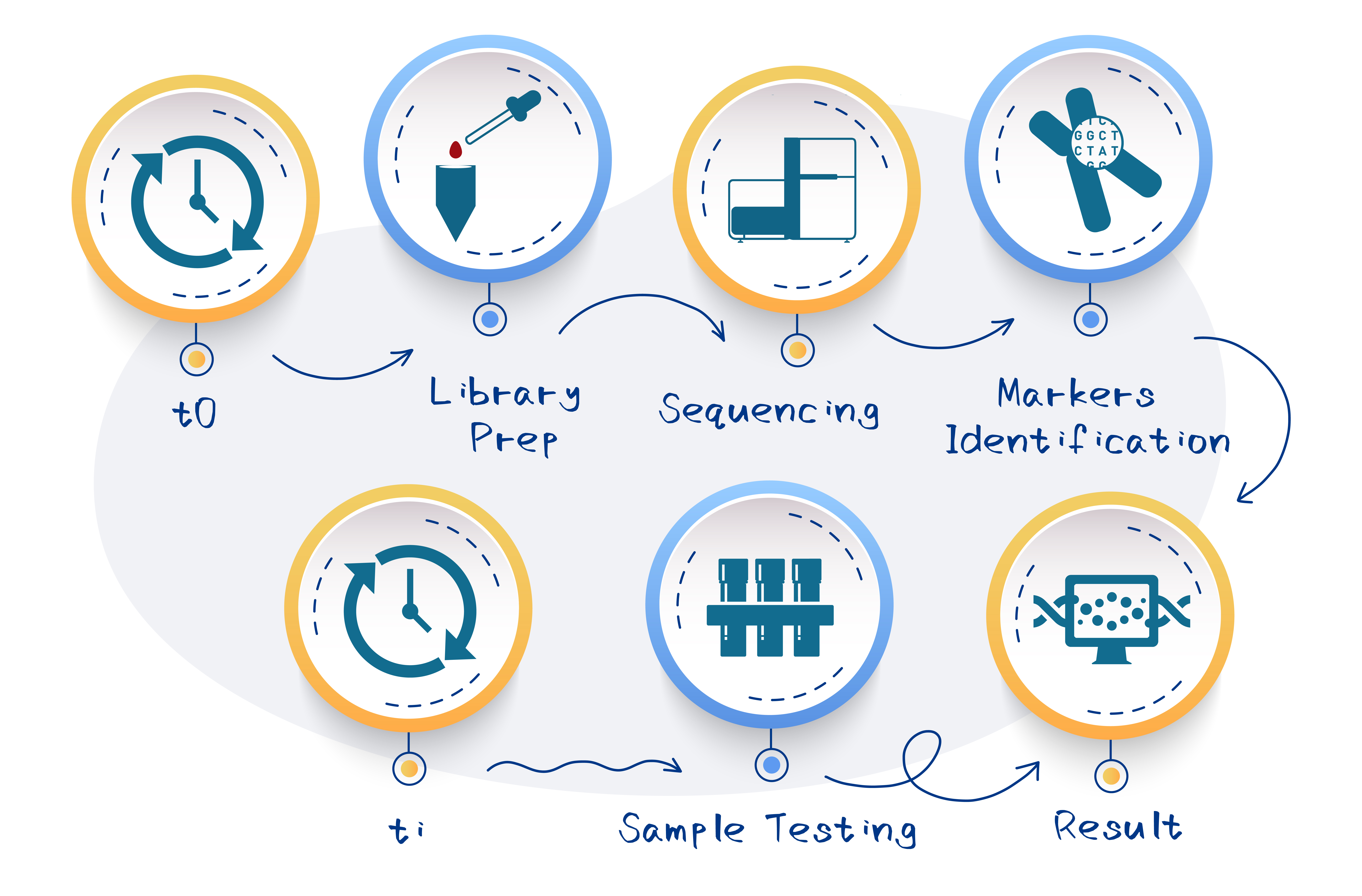

Minimal residual disease (MRD) refers to the small number of cancer cells that remain in the body after treatment. Thenumber of remaining cells may be so small that they do not cause any physical signsor symptoms and often cannot even be detected through traditional methods.
Detecting MRD may indicate that the treatment was not completely effective or that the treatment was incomplete. MRD may be present after treatment because not all of the cancer cells responded to the therapy, or because the cancer cells became resistant to the medications used.

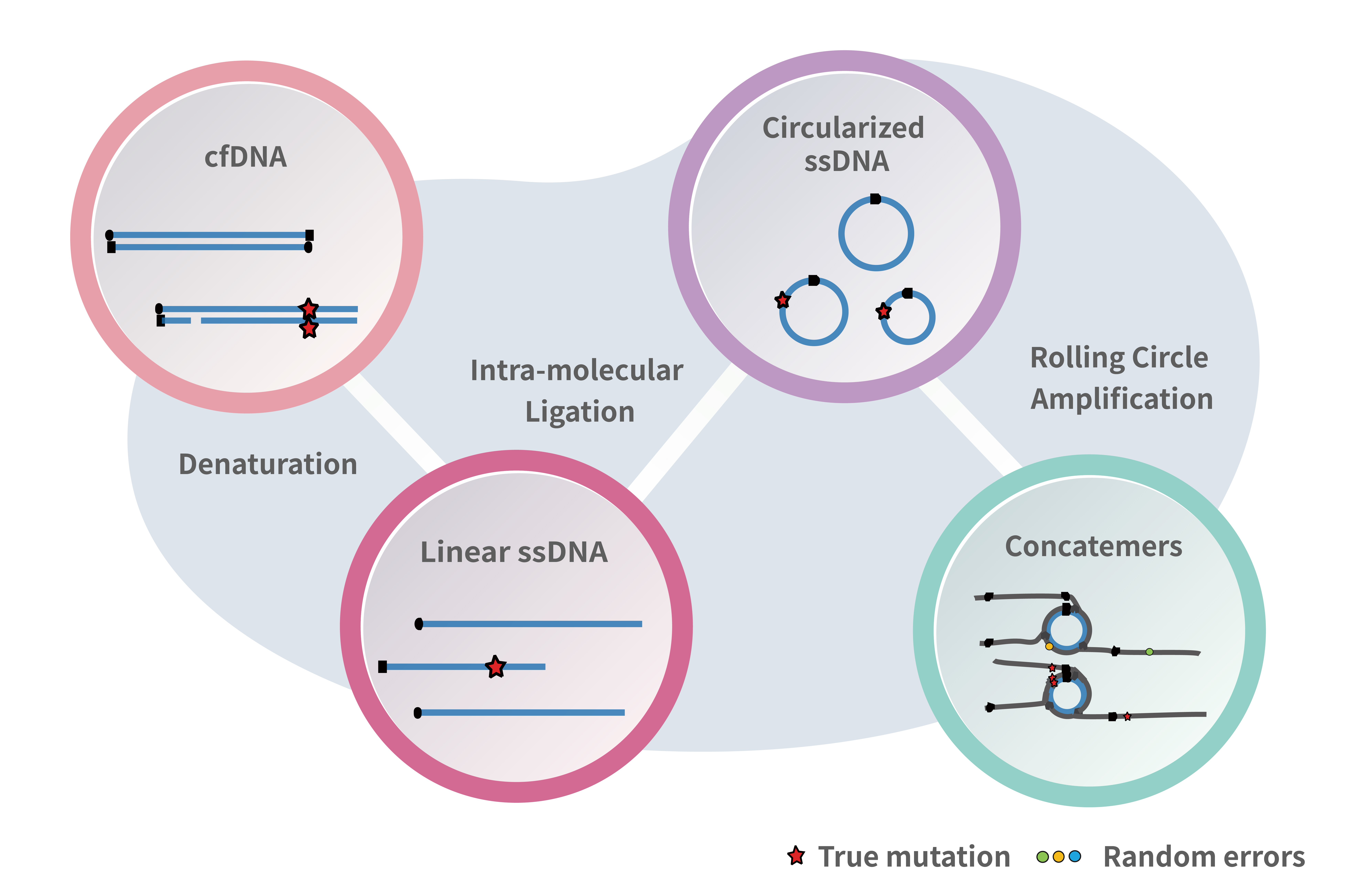
• Shallow whole genome sequencing will have eachmolecule represented by one read
• Highly efficient and comprehensive sequencing of circulating nucleic acid
• Create concatemers that enable effective noise reduction
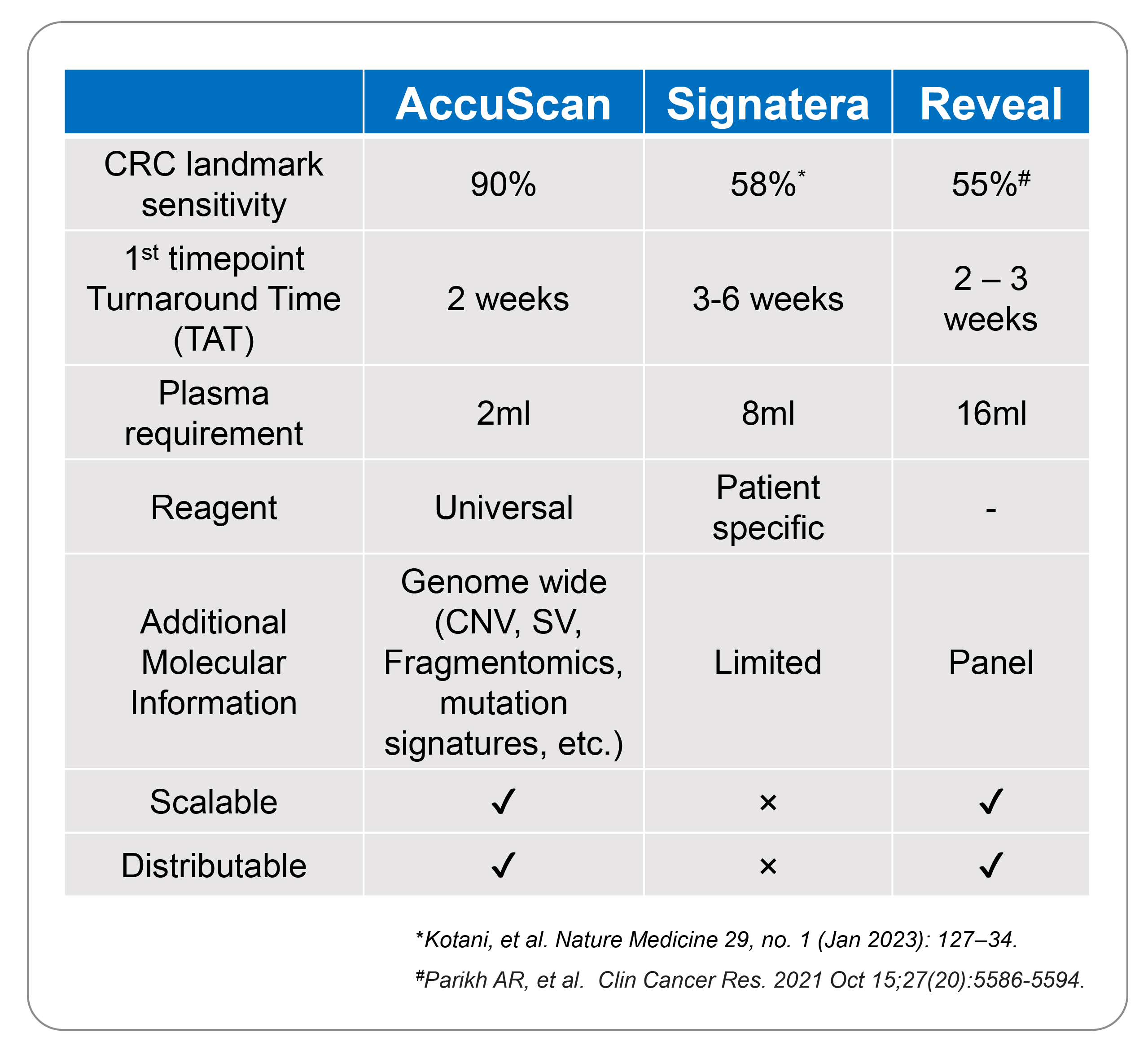
• Adistributable MRD solution
Standard lab workflow + personalized informatics
• WGS enables ultrasensitive tumor-informed MRD detection
• Reduces WGS error rate by>1000 fold
• Outperforms a personalized solution